
History of the Solar Dominion
Someone Is Coming
A human guarantee of mutual relief grows into an industrial empire with obligations it may not be able to sustain.
The promise painted inside a Dominion evacuation shelter is simple: Someone is coming.
For millions of people, that promise has been kept. For millions more, the ships arrived carrying a governor as well as relief.
A state built from an inquiry
The Dominion began with the failure of the Nine Convoys. The investigators found no single villain sufficient to explain the deaths. They found incompatible machinery, withheld route data, private monopolies on essential services and governments that had promised assistance without maintaining the means to provide it.
The founding Charter made compatibility a public obligation. A reactor fitting manufactured near Sol had to work in a frontier settlement. Fleet maintenance could not depend on one contractor's permission. Worlds joining the Charter accepted common measures, inspection and contributions to collective defence. In return, they gained access to an industrial and military network that no single colony could afford.
The name Solar Dominion originally described the reach of that guarantee. Over time, the guarantee became the justification for dominion in its more familiar sense.
The people behind the fleet
The Dominion is human, populous and argumentative. Its worlds send delegates to a Charter Assembly, but representation follows recognised settlements and their contributions. Temporary camps, refugees and communities with disputed registration often wait years for a voice. Emergency administrators can govern until a world is considered secure. On some frontiers, security has remained an emergency for three generations.
The Fleet Secretariat coordinates naval commitments. The Logistics Corps monitors the settlements that sustain them. Neither can create crews, food, workshops or loyalty by issuing a decree. Their power rests on ordinary people accepting that distant obligations will eventually protect their own homes.
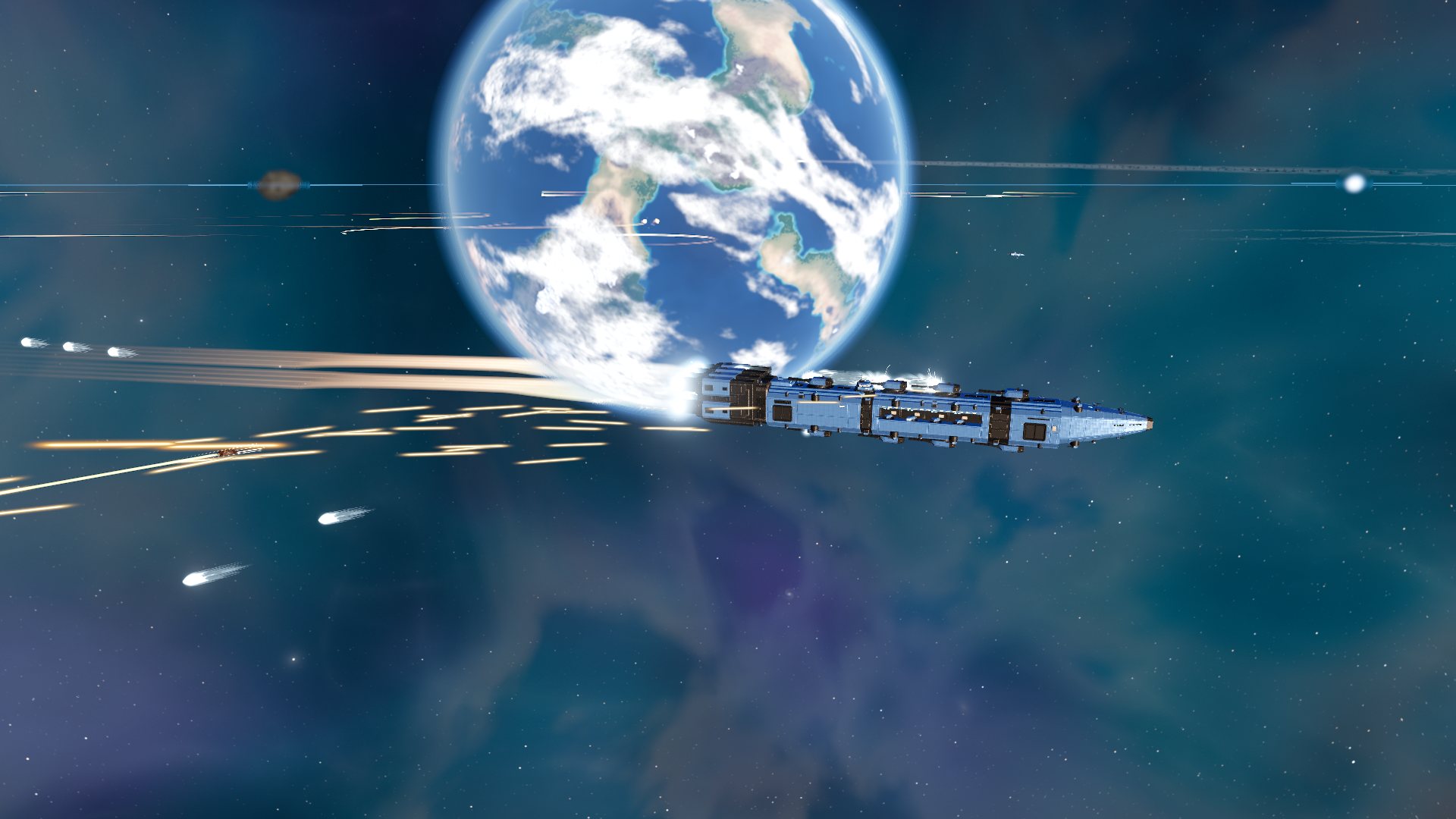
This is why Dominion power looks industrial. Broad armour panels and interchangeable assemblies mean a damaged ship can return to service through familiar work. Warm white hulls were first adopted because damage and contamination showed clearly against them. The navy kept the colour after it became a symbol of rescue. Frontier dissidents call the same hulls the white tax collectors.
Shipyards mark a vessel's launch with the names of the settlements that supported it. A battleship may carry names its crew will never visit. When those settlements fall, the names remain.
The goal
Dominion policy seeks an unbroken chain of defensible settlements and dependable industry. It wants the inhabited lanes mapped, policed and governed through agreements it can enforce. Its ideal peace is one in which no colony can be starved by a private blockade and no warband can disappear beyond the edge of official responsibility.
Its danger lies in how easily responsibility expands. An independent port can be described as a gap in convoy security. A neutral fleet can become a threat to the route. A world refusing inspection can be judged incapable of guaranteeing its neighbours' safety.
The Charter's strongest opponents quote the Charter itself. They argue that relief must not depend on submission, and that a common standard does not require a common ruler. Their rivals reply with lists of settlements saved only because someone had the authority to act.
Why the Dominion fights
The Veyaweer Eternal Empire enslaves subject worlds and reserves the benefits of Aether civilisation for its own people. To Dominion citizens, those practices make imperial claims morally intolerable. Aetherforming an inhabited world is an atrocity, however old the title authorising it. The Dominion arms resistance movements and offers protection to tributary worlds. It also expects access, basing rights and political alignment in return, giving imperial propagandists evidence for their claim that liberation is merely a change of master.
Singularity Construct threatens the Dominion's idea of accountable power. A single being can place industrial limbs around a star without consulting the societies dependent on that system. The Dominion fears that an expanding stellar installation could eventually determine which worlds receive energy and which routes remain usable. Singularity Construct has offered engineering guarantees. Dominion negotiators demand the right to enforce them. Neither trusts the other's definition of enforcement.
Marauder attacks are a direct assault on the promise of relief. A lost convoy can cost more than its cargo: frightened populations withdraw labour and political support from a network that has failed them. Naval commanders therefore pursue raiders aggressively, sometimes treating whole clans as combatants. Every destroyed civilian anchorage gives the next warlord a recruiting speech.
The fracture within
The Dominion's expansionists believe every unprotected frontier will eventually become someone else's weapon. The Charter restitution movement believes endless expansion is turning a mutual guarantee into permanent military rule. Both can point to real graves.
When fleets exceed the support their populations can sustain, the argument reaches the mess decks. Crews receive deferred maintenance, extended deployments and orders to protect worlds whose names they have never heard. Veterans endure longer, but endurance is finite. Some captains withdraw without permission. Some become mercenaries. Others decide that the abandoned frontier has more in common with a clan than with the Assembly.
The Dominion exists because scattered people once discovered that survival required a shared obligation. Its future depends on whether that obligation can survive becoming an empire.
Drawn from a game in development. Details may change.