
Marauders and independent powers
Clans, Contracts and Free Worlds
Marauder clans, contract fleets and independent societies fight to survive between the expanding powers.
Imperial charts call the frontier abandoned. Dominion charts call it unsettled. The people already living there have learned to check what follows those words.
Where the clans came from
The Marauders have no single founding species, capital or sacred day. Their clans descend from evacuation fleets, industrial crews, soldiers left without a government and communities expelled from routes claimed by stronger neighbours. Some lineages reach back to the Long Silence. Others began with a Dominion captain who missed one payroll too many and decided to keep the ship.
Shared ancestry does not make them a hidden nation. Clans feud, exchange members, adopt survivors and remember incompatible versions of their origins. The name Marauders is an outsider's category that many now use as a warning: if no recognised law protects them, they will make themselves expensive to ignore.
That history explains their violence. It does not excuse it. Clans have bombarded settlements, extorted vulnerable habitats and killed crews for cargo they could have bought. A family can carry an authentic history of abandonment and still become the reason another family needs rescue.
The economy of remaining free
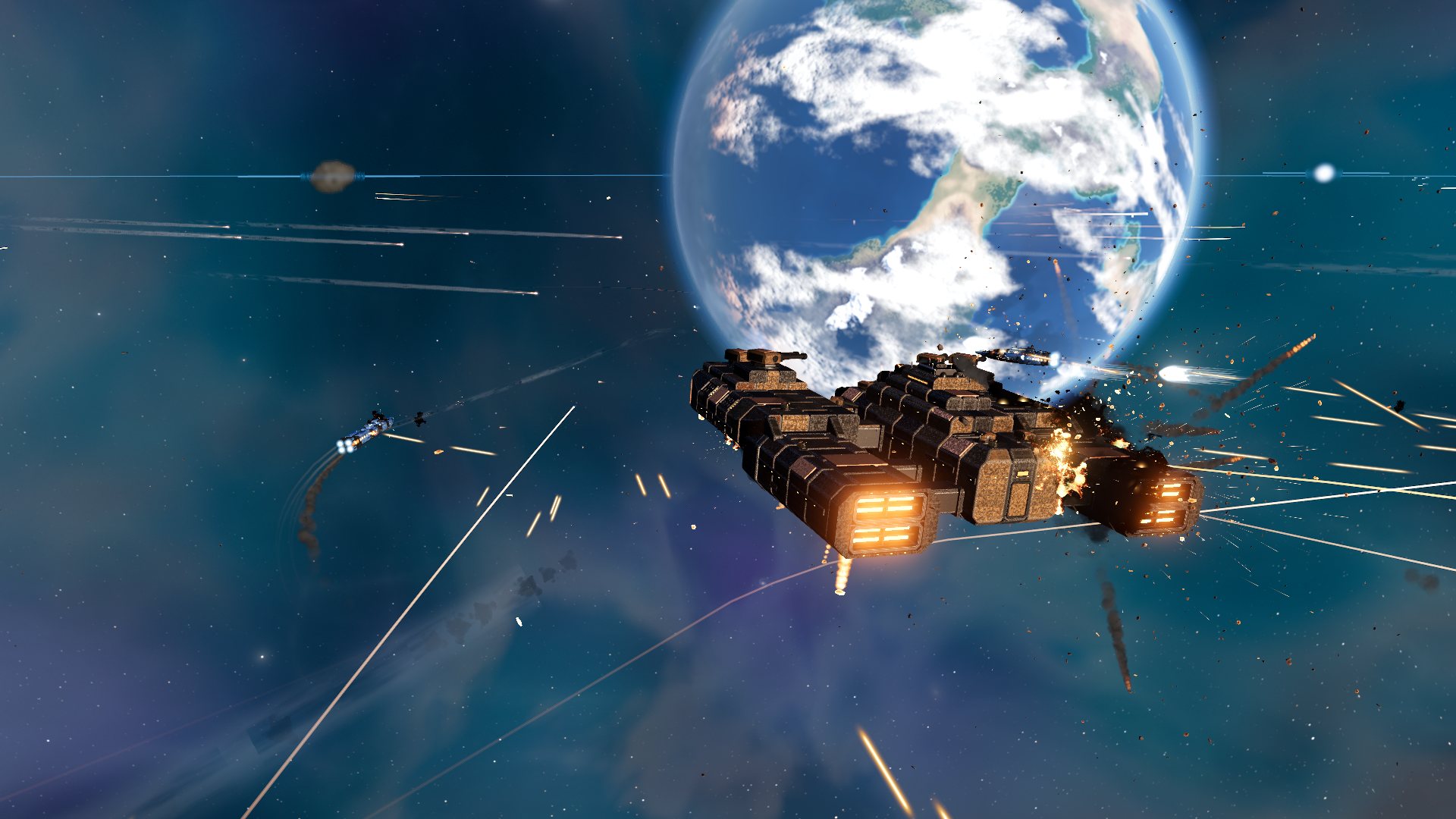
A clan survives through repair skills, stores, salvage access, temporary anchorages and the loyalty of people who have few places else to go. Its ships are deliberately built around a recognisable structural tradition. Captured components are rebuilt into heavy frames and protected assemblies. Matched parts can be exchanged between both sides of a hull. Even a raider cannot afford every repair to become an invention.
Defended worlds provide workshops, hidden populations and resources. A planet outsiders consider uncolonised may already sustain a clan's seasonal anchorage or hold a garrison collecting passage tribute. Richer, more distant holdings attract stronger defenders because they feed larger networks of dependence.
The Clan Ark carries people and equipment needed to establish an outpost after a world has been captured. It is a commitment to occupation, however often its escorts describe themselves as wanderers. The Warlord's Bastion makes a different promise: enough force to unite clans that would otherwise refuse one another's demands.
The Ash Ledger
The Ash Ledger clan keeps the names of people lost when an evacuation contractor sold their reserved berths. Its elders regard every contract as a potential weapon. They demand physical collateral, favour torpedo ambushes and preserve exact accounts of debts.
They sometimes escort refugee ships at cost. They also seize civilian cargoes to satisfy debts incurred by governments the crews never elected. The Ledger's justice follows the debt more faithfully than the debtor.
The Furnace Kin
The Furnace Kin descend from industrial populations whose habitats were stripped after their employers withdrew. Their Forge Tenders are centres of education, repair and political authority. A skilled outsider can become kin more quickly than a wealthy one.
They raid for machinery and threaten worlds that refuse them anchorage. Their leaders insist the clan must secure territory before the next generation inherits only a failing fleet. Neighbouring settlements hear the same argument every empire makes before occupying them.
The Hollow Crown
The Hollow Crown is a coalition held together by the memory of a horde that briefly forced several powers to negotiate on equal terms. Its warlords claim that clan independence will always be temporary until it is protected by a force the settled powers cannot dismantle piecemeal.
Its gatherings attract displaced crews, ambitious captains and predators who want permission to raid under a larger banner. When a Bastion becomes its rallying point, even clans that despise the coalition must decide whether refusing it will leave them alone against everyone else.
Why the Marauders fight
The Solar Dominion needs secure routes. Clan power depends on access to routes the Dominion cannot fully police. Convoy raids bring naval reprisals; reprisals close anchorages; displaced clans raid farther afield. Both sides can identify the latest attack and struggle to agree where the sequence began.
The Veyaweer Eternal Empire claims installations the clans have maintained for generations. Imperial officials call recovery lawful restitution. Clan elders ask where that law was when the empire stopped answering distress calls. Tribute collections and archival recovery missions become battles over whether survival created a right to remain.
Singularity Construct disputes salvage that the clans thought lifeless. Some negotiate boundaries and exchange recovered memory structures for useful material. Others regard its expanding body as the arrival of another landlord, this time one capable of personally occupying every contested site. No warlord speaks for every clan, and no clan's friendship guarantees safe passage through another's anchorage.
Mercenaries
Mercenary organisations turn the insecurity of the frontier into contracts. Some began as independent defence fleets. Others are demobilised crews or deserters who preserved a chain of command after losing faith in the government above it.
The Relay Compact is known for honouring evacuation contracts even after a client's defeat. Its captains insist that reputation is their only durable territory. The Red Balance Companies enforce payment clauses with blockades, arguing that a contractor who can be cheated cannot offer anyone dependable protection. Both have clients who call them indispensable and former clients who call them extortionists.
Mercenaries want solvent employers, enforceable agreements and somewhere to repair. A permanent peace might destroy their income. A war that destroys every employer would do the same. Their interventions often preserve an uneasy balance because an uneasy balance still pays.
Minor powers
The Bellweather Assemblies are independent habitat communities whose laws require a public account of every military requisition. They distrust Dominion emergency rule but need its markets. Their shipyards have repaired both Charter patrols and the clans hunting them.
The Orison Principalities are former imperial subjects divided between hereditary authorities who retain Veyaweer titles and civic movements demanding the right to abandon them. A Dominion guarantee could free them from tribute while making their politics dependent on human naval priorities.
The Quiet Anchorage is a treaty port that admits embassies, mercenary brokers and clan envoys under strict limits on armed vessels. Its neutrality survives because many enemies need one place where surrender terms and prisoner exchanges can be discussed. Every power has contingency plans to seize it.
These societies do not exist to wait for annexation. They have histories, ambitions and choices of their own. They bargain, resist, collaborate and sometimes choose the power that an outsider considers the worse option. Independence is often the right to choose which danger seems survivable.
Drawn from a game in development. Details may change.